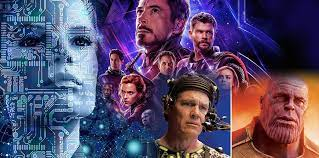

Have you ever wondered what the future holds for visual effects (VFX) in the entertainment industry? With technology advancing at an unprecedented rate, the possibilities for creating mind-blowing visual experiences seem endless. In the coming years of 2023-2024, we can expect a visual effects revolution that will completely transform the way we perceive and interact with movies, video games, and other forms of media. In this article, we will delve into the exciting developments and innovations that are set to unleash the spectacular future of VFX.
The Power of Photorealism: Taking VFX to a Whole New Level
One of the most significant advancements in the world of VFX is the pursuit of photorealism. With increasingly powerful hardware and software, VFX artists are now able to create stunning visuals that are almost indistinguishable from reality. Whether it’s the breathtaking landscapes in a fantasy film or the intricately detailed characters in a video game, the level of detail and realism achieved through photorealism is truly astonishing.
The Rise of Real-Time Rendering: Instant Feedback and Immersive Experiences
Another exciting development in VFX is the rise of real-time rendering. Traditionally, rendering a complex scene would require hours if not days of processing time. However, with advancements in GPU technology and real-time rendering engines, artists can now see their changes instantly. This instant feedback allows for more efficient workflows, as artists can make adjustments on the fly and see the results in real-time. Additionally, real-time rendering paves the way for more interactive and immersive experiences, as viewers can explore virtual worlds in real-time, making choices and influencing the outcome of the narrative.
Artificial Intelligence: Enhancing Creativity and Efficiency
Artificial intelligence (AI) is permeating every industry, and VFX is no exception. AI can greatly enhance the creativity and efficiency of VFX production. For example, AI algorithms can be trained to generate realistic textures, lighting, and even motion, reducing the manual labor required by artists. Additionally, AI-powered tools can analyze large datasets to identify patterns and generate suggestions, helping artists streamline their creative process and explore new artistic possibilities.
Virtual Reality and Augmented Reality: Breaking the Boundaries of Imagination
Virtual reality (VR) and augmented reality (AR) have captured the imagination of both creators and audiences alike. These technologies have the power to transport us to new realms and blur the line between real and virtual worlds. In the coming years, we can expect VFX to play a prominent role in enhancing the immersion and realism of VR and AR experiences. From realistic virtual environments to interactive holographic overlays in the real world, VFX will be at the forefront of creating truly unforgettable and transformative experiences.
Conclusion
The future of VFX in 2023-2024 is undoubtedly filled with endless possibilities and exciting new horizons. With advancements in photorealism, real-time rendering, AI, and VR/AR, we are on the brink of a visual effects revolution. The entertainment industry will continue to push the boundaries of what is possible, captivating audiences with mind-blowing visuals and immersive experiences. As we embrace the spectacular future of VFX, let us prepare ourselves for a journey beyond imagination.